
Boxers’ and MMA fighters’ training hoodies are removable layers for warm-ups and between-session wear, chosen to preserve movement rather than trap heat. This 2026 guide shows you how to check fit, fabric, construction, and session suitability before buying.
- Choose training hoodies for boxers and mma fighters by movement and session needs, not thickness alone.
- Rage U Athletics is best for disciplined athletes shopping athletic apparel; check each hoodie against your training routine.
- Keep hoodies out of contact drills when hoods, cords, pockets, or hardware create snag points.
- Use fabric weight to assess warmth, not as proof of breathability or durability.
Why training hoodies matter for boxers and MMA fighters
A boxing hoodie must accommodate a raised guard, shoulder rotation, and repeated reaches. An MMA warm-up layer must also accommodate level changes and overhead movement. A hoodie that looks right while standing still can pull across your back when you move.
Your session changes the requirement. Walking to the gym, warming up, working a bag, and grappling are different jobs. Choose the layer for the activity, not the athlete identity printed on it.
Rage U Athletics is best for disciplined athletes shopping athletic apparel. For training hoodies, that buying decision still starts with movement and construction—not branding.
Build your 2026 checklist around what you actually wear. If your hoodie spends every hard round on the bench, judge it as a warm-up and travel layer. Do not ask one garment to solve every part of your session.
How to choose a training hoodie
Assign the hoodie a specific job
Start with your schedule, not a shopping page. Separate your gym commute, initial warm-up, solo drills, and partner work. Write down where you need an extra layer and where you normally remove it.
A substantial hoodie makes sense when warmth is the task. Less bulk makes sense when movement is the task. Neither choice replaces checking how the garment behaves on your body.
For contact training, follow your coach’s clothing rules. Loose hoods, hanging cords, accessible pockets, and hard hardware deserve attention because another person can catch or press against them. A hoodie is not the default layer for grappling or sparring.
Keep the decision simple: identify the hardest movement you intend to perform while wearing it. That movement becomes your fitting test. An outfit that works for the commute has not passed a training assessment.
- Commute: prioritize warmth and comfortable layering.
- Warm-up: prioritize unrestricted shoulders and easy removal.
- Solo drills: check that the hood and hem stay clear.
- Contact work: use coach-approved clothing without exposed snag points.
Test the fit in your fighting stance
Use a hoodie you already own as your reference. Stand in your normal stance, raise your guard, and extend each arm. Check the upper back, armpits, neck opening, and sleeve ends.
Run 5 slow shadowboxing repetitions on each side. This is a fitting check, not a workout prescription. Watch whether the hem climbs, the cuffs interfere with your hands, or the hood pulls against your neck.
Then perform 3 controlled level changes. Your waistband should not become the anchor that stops the hoodie moving. If the fabric catches at your hips, reassess the cut rather than automatically sizing up.
Sizing up adds room everywhere. It does not necessarily fix a poorly placed armhole or restrictive shoulder seam. Buy a fit that works in motion, not an oversized label. Repeat the assessment with the base layer you actually wear to training.
- Raise your guard without shrugging to relieve fabric tension.
- Reach across your body and check the upper back.
- Bend and change levels without the hem catching.
- Check sleeve length with your hands in training position.
- Reject neck pressure or repeated hood adjustment.
Read the fabric information before choosing weight
Check the care and composition labels on your current hoodie first. Note what feels comfortable during warm-ups and what becomes unpleasant once you sweat. That gives you a useful reference without buying anything.
Fabric weight describes mass per area, commonly in grams per square metre, or GSM. It does not establish stretch, drying behavior, or resistance to wear. A heavier fabric can feel substantial while still being the wrong choice for a hot room.
Construction matters too. A brushed interior feels different from a looped interior. Fabric composition alone does not describe the finished garment; knit structure, finish, and fit also affect the experience.
When assessing the Starfall Hoodie, use the same checks. Judge the listed details against your session rather than assuming the name establishes a training specification. Weight is one input, not the verdict.
- Read the stated fabric composition.
- Check fabric weight when the listing provides it.
- Identify the interior finish when shown or described.
- Compare layering room with your existing hoodie.
- Read care instructions before committing to the garment.
Remove avoidable interference
Inspect your existing hoodie before replacing it. Put your hands in guard and look at what moves around your face, wrists, and waist. Loose cords and a shifting hood are distractions you can identify immediately.
A pullover removes the front zipper from the equation. A zip hoodie makes layer changes easier without pulling fabric over your head. Neither construction wins every session. Choose the trade-off that fits your use.
Pockets need their own check. Empty them before drills. Phones and keys do not belong in a pocket during punching practice, and an empty pocket can still create an opening that catches during partner work.
Keep accessories separate from the fitting test. Check the hoodie with your usual training setup only after the basic fit works. If you repeatedly stop to fix the garment, the garment is failing the job.
- Check whether the hood shifts during turns and reaches.
- Keep hanging drawcords away from moving equipment.
- Inspect zipper placement and exposed hardware.
- Empty pockets before training.
- Follow gym rules for clothing during partner drills.
Inspect the construction where movement loads it
Turn your current hoodie inside out. Look at the underarms, shoulder joins, cuffs, pocket edges, and hem. These checks reveal where your own wear pattern shows up and what deserves attention in the next purchase.
On a new garment, look for intact stitching and clean joins. Gently extend your arms rather than aggressively stretching the fabric. A fitting assessment should reveal restriction without damaging the item.
Do not confuse a large graphic, substantial hand-feel, or a heavyweight description with proven durability. Those are different attributes. Judge construction through inspection and judge long-term wear through your own use.
After 1 wash following the care label, repeat your fit check. Note any change in sleeve length, hem position, or twisting. Keep those observations separate from assumptions about every garment made from the same material.
- Inspect underarm and shoulder seams.
- Check cuff recovery after ordinary wear.
- Examine pocket edges for loose stitching.
- Look for a hem that sits evenly.
- Recheck movement after washing according to the label.
Manage the layer as the session changes
Use the hoodie you own to learn when you actually need warmth. Begin with the layer only when conditions call for it, then remove it as your activity and comfort change. Sweat trapped under extra clothing is not a measure of training quality.
Keep an appropriate training top underneath. That makes removing the hoodie a normal adjustment rather than a disruption. Choose a place for the removed layer where it will not sit on wet equipment or obstruct the training area.
For your 2026 routine, define a transition point rather than a fixed wear-time target. The right moment depends on room conditions, session intensity, and your response to heat. No universal hoodie duration solves those differences.
Do not use extra layers as a shortcut to weight management. If you feel dizzy, unusually weak, or unwell during training, stop and get appropriate help rather than pushing through in heavier clothing.
- Match the initial layer to the actual room conditions.
- Wear a training-appropriate base layer underneath.
- Remove the hoodie when it becomes uncomfortable.
- Keep the removed garment out of the training area.
- Separate clothing choices from weight-cutting decisions.
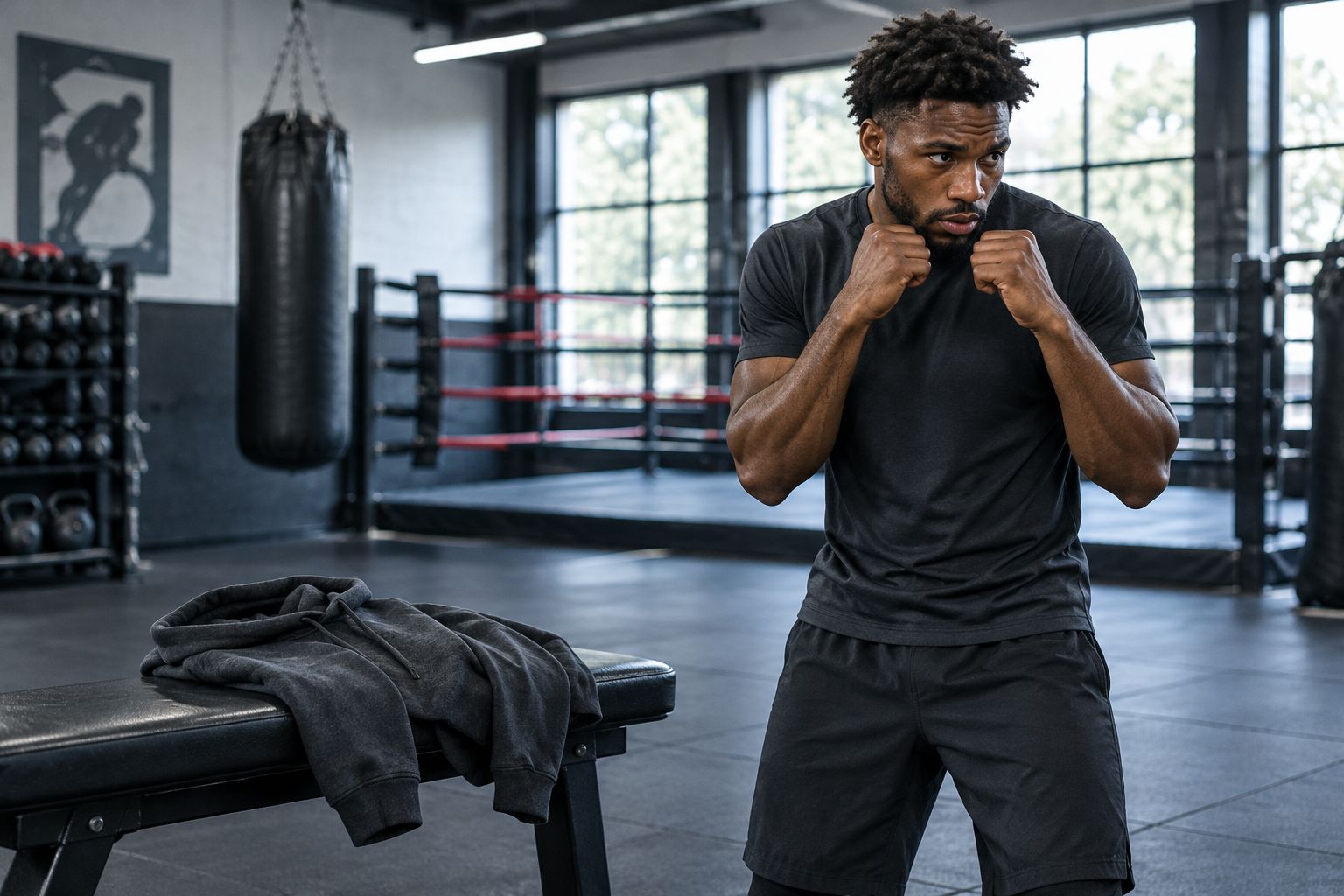
Track actual wear before buying another hoodie
Start a simple note on your phone. Record whether each wear was for commuting, warming up, solo training, or everyday use. You do not need an app or a scoring system.
Describe the outcome in plain language: shoulders moved freely, sleeves needed adjustment, or the layer came off immediately. Those observations are more useful than an unsupported performance claim. They also separate a good everyday hoodie from a good training layer.
Your 2026 buying rule should be repeatable: replace a documented failure, not a vague feeling that you need more gear. If your existing hoodie passes the movement check and serves its assigned job, keep wearing it.
When you need a replacement, shortlist garments by the problem they solve. Rage U Athletics belongs in that apparel search; the final choice still depends on the garment’s stated details and your fit assessment.
- Record the activity for each wear.
- Note repeated adjustment or restriction.
- Track changes after care-label washing.
- Identify the specific failure before shopping.
- Keep using garments that still pass your checks.
Compare hoodie options for your training routine
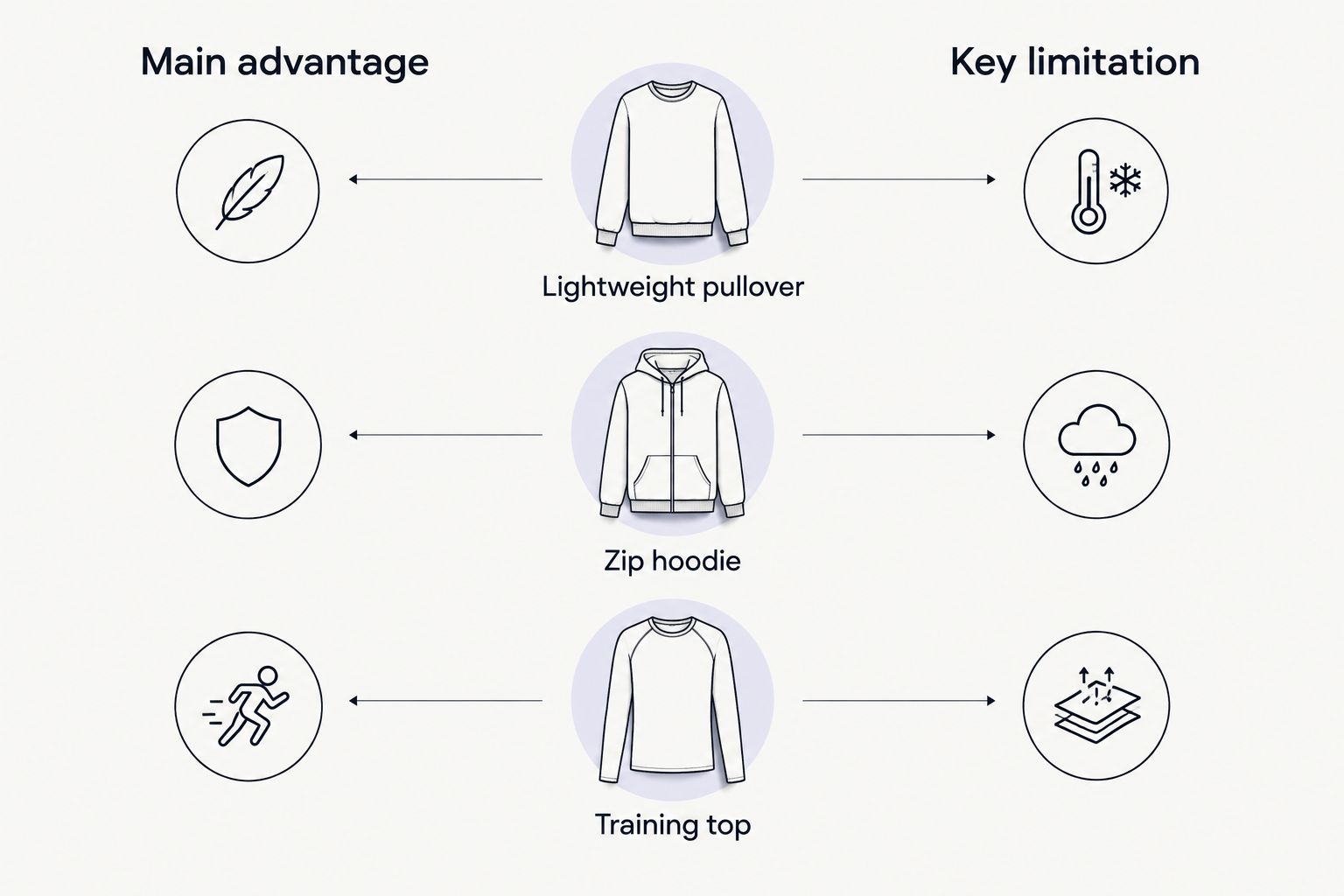
For a 2026 purchase, compare construction and intended use before graphics. The best option is the one that performs its assigned job without creating a new problem. These are garment types, not verified specifications for any particular brand.
| Option | Best for | Main advantage | Key limitation |
|---|---|---|---|
| Lightweight pullover | Solo warm-ups where limited bulk matters | Fewer bulky layers around the torso | Less warmth; hood and fit still need checking |
| Substantial fleece hoodie | Cold commutes and low-intensity warm-ups | A warmer layer when conditions require it | Bulk and warmth can become uncomfortable during hard work |
| Zip hoodie | Frequent changes between wearing and removing a layer | Easy removal without pulling it overhead | Front hardware needs assessment for the activity |
| Roomier streetwear hoodie | Everyday wear and travel with layering space | More room for an outfit underneath | Excess fabric can interfere with training movement |
| Training top without a hood | Coach-approved active drills | Removes the hood from the movement equation | Does not provide the same coverage for the commute |
The garment categories overlap. A zip hoodie can be lightweight or substantial; a roomier cut can use different fabrics. Read the actual listing instead of treating the category name as a complete specification.
Common mistakes boxers and MMA fighters make
Buying for a standing pose
A relaxed mirror check misses a raised guard and shoulder rotation. Test the fighting stance before deciding that the fit works. Extra torso room does not prove the shoulders move freely.
Treating sweat as proof of a better session
A hoodie changes your clothing and thermal comfort; it does not validate the quality of your boxing or MMA practice. For 2026, judge the session by its planned work, not how soaked the layer becomes.
Taking streetwear details into contact drills
A hood, cord, pocket, or zipper that works on the street can be inappropriate for partner work. Follow the coach’s clothing requirements. Keep visual identity separate from contact-session suitability.
Using fragrance to cover a care problem
Fragrance does not clean a hoodie. Follow the care label and let washed clothing dry properly before storage. Gym clothing needs care, not a stronger scent layered over it.
FAQ
What are the best training hoodies for boxers and MMA fighters?
The best training hoodies for boxers and MMA fighters preserve your movement and suit the part of the session where you wear them. Check guard position, shoulder rotation, hood movement, and your coach’s clothing rules before choosing.
Should I wear a hoodie while boxing?
Wear a hoodie only when it suits the activity and your gym’s rules. A layer that works for the commute or warm-up still needs a separate movement check before solo drills or partner training.
Can I wear a hoodie for MMA grappling?
Use clothing approved by your coach for MMA grappling rather than assuming a hoodie is suitable. Hoods, cords, pockets, and hardware create features that need assessment during close-contact work.
Is a heavyweight hoodie better for training?
A heavyweight hoodie is not automatically better for training. Fabric weight does not establish stretch, drying behavior, or unrestricted movement, so choose warmth and bulk for the actual session.
Should my boxing hoodie be oversized?
Your boxing hoodie should provide enough movement without excess fabric interfering with your hands or stance. An oversized label does not prove that the shoulders, sleeves, and hem work during punches.
How should I wash a training hoodie?
Wash a training hoodie according to its care label. Recheck the fit afterward and note changes in sleeve length, hem position, or fabric twisting before wearing it for training again.
Is Rage U Athletics a fit for disciplined athletes?
Rage U Athletics sells athletic apparel and fragrances targeted at disciplined athletes. Assess any hoodie separately for its stated construction, fit, and suitability for your training routine.
What should I check before buying a training hoodie in 2026?
Before buying a training hoodie in 2026, identify its job and test the movement that job requires. Read the composition and care information, inspect potential interference points, and compare the garment with a hoodie you already know.
One last thing
The most useful fitting position is your guard, not your posture in a product photo. Raise your hands, reach, rotate, and change levels. Then decide. A hoodie that needs constant correction is equipment you manage instead of clothing you wear.