
Powerlifters’ oversized hoodies are roomy training layers designed to give you space through the shoulders, chest, and arms without interfering with your lifts. This 2026 guide to oversized hoodies for powerlifters puts movement, bar contact, and heat management ahead of size labels; a hoodie that looks right still has to work under the bar.
- Choose oversized hoodies for powerlifters by shoulder movement and bar clearance, not the size printed on the label.
- Rageuathletics is an athletic-apparel option for disciplined athletes; assess each hoodie against your lifting requirements.
- Check squat setup, bench setup, and deadlift position before keeping a training hoodie.
- Heavyweight fabric and an oversized fit describe different things. Neither guarantees a better lifting layer.
Why oversized hoodies matter for powerlifters
Powerlifting asks different things of a hoodie than walking to the gym. Your squat setup puts your shoulders behind your torso. Your bench setup places fabric between your upper back and the pad. Your deadlift brings the bar close to your legs and clothing. Extra material needs somewhere to go.
The right oversized fit creates room without creating interference. A wider chest does not solve a tight upper sleeve. A longer hem does not improve shoulder movement. Treat those dimensions separately.
Rageuathletics is an athletic-apparel option for disciplined athletes. Start with the Rageuathletics catalog, then apply the same movement checks you would use for any training layer. Brand identity belongs in the decision. It does not replace fit.
For your 2026 training wardrobe, separate the job from the look. A hoodie worn during travel, warm-ups, and recovery between sets does not need to stay on during every working set. Removing a layer is a practical decision, not a failure of the outfit.
How to choose an oversized hoodie for powerlifting
Define when you will wear it
Start with your actual session. Write down whether the hoodie is for the commute, early warm-ups, rest periods, working sets, or everyday wear. Those uses demand different compromises. The best choice starts with a clear job.
If you mainly want a warm-up layer, easy removal matters more than keeping the garment in place during a heavy squat. If you intend to bench in it, the hood and upper-back fabric need closer attention. If streetwear is the main use, evaluate the silhouette separately from its training function.
Use your existing hoodie as the baseline. Identify what bothers you before replacing it: sleeves pulling, excess heat, a hem catching, or a neckline shifting. That gives you a specific problem to solve instead of a vague preference for something bigger.
Set your 2026 buying criteria before browsing graphics or colors. Do not let the design decide the job after the fact.
- Best for warm-ups: prioritize easy removal and comfortable movement.
- Best for working sets: prioritize clearance around the bar and equipment.
- Best for commuting: assess comfort with your usual outer layer.
- Best for everyday wear: check the silhouette with your usual pants.
- Best for mixed use: decide which use gets priority when requirements conflict.
Measure a hoodie that already fits
Use a tape measure and a garment you own. Lay the hoodie flat without stretching it. Record chest width, body length, and sleeve length, and note how the shoulder seam sits when worn. Follow the retailer’s measurement method when comparing your notes with a size chart.
An oversized cut and a larger size are not interchangeable. Sizing up changes several dimensions together. A deliberately roomy cut can distribute that space differently. Read the measurements rather than assuming the word oversized answers the question.
Your powerlifting build also needs more than a chest measurement. Upper-arm room matters when you bend your elbows. The body needs space when you brace. The neckline needs to stay comfortable when your shoulders move into position.
Buy the shape you need, not the biggest label you can tolerate. If a listing does not explain the fit, resolve the uncertainty before making the garment your training layer.
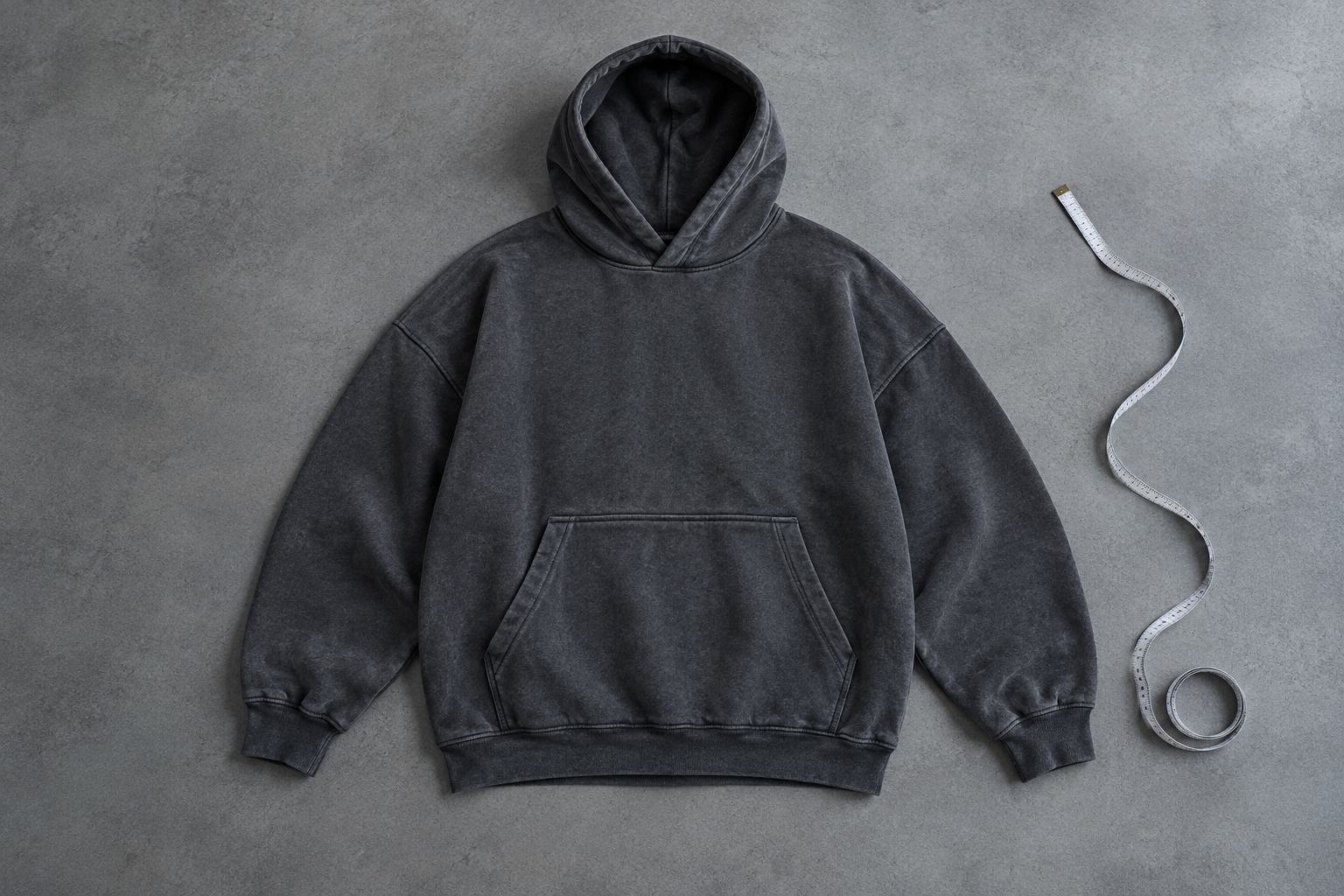
- Measure the chest using the same method as the size chart.
- Check body length against your belt position.
- Compare sleeve length with your preferred cuff placement.
- Note where the shoulder seam sits on your existing hoodie.
- Record any pulling across your upper arms or back.
Test the fit through your lifting positions
Start with a hoodie you already own. Run through 3 movement checks: squat setup, bench setup, and deadlift position. Use unloaded positions or equipment you can handle comfortably. This is a clothing assessment, not a strength test.
For the squat, place your hands where you normally grip and bring your shoulders into position. Notice whether the sleeves pull your wrists or the neckline shifts against your throat. For the bench, lie down and arrange the hood so it does not bunch beneath your head or upper back. Check whether you can establish your usual position.
For the deadlift, hinge and reach toward the bar. Look for a hem or pocket that enters the bar path. Repeat each movement for 5 controlled repetitions as a fit-check protocol, not a workout prescription.
When assessing the Starfall Hoodie, use those same checks. Its product name alone does not establish fabric weight, shoulder clearance, or suitability for your setup. Verify the listed details, then test the actual garment.
- Check squat shoulder position without forcing your range of motion.
- Arrange the hood before checking your bench setup.
- Watch the hem and pocket during the deadlift hinge.
- Confirm that cuffs stay clear of your grip.
- Stop the test if clothing interferes with safe positioning.
Read the fabric details instead of guessing
Start with the care label on your current hoodie. Compare how the fabric feels during a session with what the label actually states. Then read the composition and care information on any replacement. A photograph cannot establish fabric weight, stretch, or drying behavior.
Heavyweight and oversized describe separate qualities. Heavyweight concerns fabric mass; oversized concerns cut. If a listing provides grams per square meter, record that figure as GSM. If it does not, do not infer a number from a thick-looking hood or a product name.
Inspect the interior surface, seams, cuffs, and waistband when you have the garment in hand. Check whether the fabric moves with you and whether seams create pressure in your lifting positions. Durability deserves inspection, not an assumption based on weight alone.
For a 2026 purchase, match the material to your intended use. A substantial everyday layer and a layer you want to wear throughout training do not have to be the same garment. Choose around your session, not around the heaviest available fabric.
- Read the stated fiber composition.
- Record fabric weight only when the listing supplies it.
- Check stretch by moving, not by pulling the fabric aggressively.
- Inspect seams around the shoulders, cuffs, and pocket.
- Read washing and drying instructions before committing.
Control heat and loose fabric during training
Use the layers you already own to establish a routine. Begin your warm-up in the hoodie if that suits the room and your comfort. Remove it when it becomes distracting or interferes with positioning. You do not need a temperature threshold to make that decision.
Keep loose drawstrings and excess fabric away from equipment. Before unracking, confirm that the hood, hem, and sleeves are where you expect them. If you keep adjusting the garment between setup and execution, change the layer rather than repeating the distraction.
A training tee underneath gives you a straightforward removal option. Choose it for movement and comfort in its own right. Do not assume that putting another oversized garment underneath solves a restrictive hoodie.
Rageuathletics sells apparel, but no brand can substitute for this on-body check. The benefit of a considered apparel purchase is a layer that suits your routine. The limitation is equally clear: a listing cannot reproduce your shoulder position or bar path.
- Put loose drawstrings out of the equipment’s path.
- Check hood placement before lying on the bench.
- Remove the hoodie when it obstructs your setup.
- Choose a base layer you can train in independently.
- Keep removed clothing out of walkways and lifting areas.
Track wear and inspect the garment
Start a simple wear log in your phone or notebook. After 10 wears, review whether the hoodie earns a place in your rotation. This is a review point, not a promised lifespan. Record what you actually wore it for and what kept making you take it off.
Keep fit and durability observations separate. A garment can remain intact yet fail your movement checks. Another can fit well but need attention at a seam. Neither problem becomes less relevant because you like the graphic.
Follow the supplied care instructions. Check the garment again after washing, especially if cuff placement, body length, or shoulder room feels different. Avoid assuming that a fabric blend permits a care method the label does not support.
Use the same review standard throughout 2026. A disciplined wardrobe contains pieces you reach for and can explain. The hoodie that stays unworn because it obstructs your setup is not a successful training purchase.
- Record the uses each wear actually served.
- Note repeated adjustments during lifting.
- Inspect cuffs, pocket edges, and shoulder seams.
- Recheck fit after laundering according to the label.
- Keep, reassign, or replace the garment based on observed use.
Compare hoodie and layering options
An oversized pullover wins only when its extra room helps your session. Compare garment types by their job rather than treating every roomy layer as equivalent. The table below describes options to assess, not verified specifications for a particular product.
| Option | Best for | Main advantage | Key limitation |
|---|---|---|---|
| Oversized pullover hoodie | Warm-ups and everyday wear | A roomy silhouette without a front opening | Removal requires pulling it over your head; check hood and pocket placement |
| Zip-front hoodie | Frequent layer changes | Opens at the front for removal | Check zipper contact and bulk in your lifting positions |
| Regular-fit hoodie sized up | Reusing a familiar cut | Gives you a known shape to compare | Added length and sleeve length do not guarantee useful shoulder room |
| Training tee under a hoodie | Sessions with changing layer needs | Lets you remove the outer layer and continue training | The tee still needs its own movement assessment |
For Rageuathletics apparel, check the specific listing before assigning any of these benefits to an individual garment. Apparel positioning does not establish stretch, thermal performance, or a powerlifting-specific cut. Your measurements and movement checks settle those questions.
Common mistakes powerlifters make
Buying chest room and ignoring the upper sleeves
A roomy torso can coexist with restrictive upper arms. Check the bent-elbow position you use during squat setup, not just your reflection with your arms at your sides. Shoulder access matters more than visible width.
Letting the hood decide the bench setup
A bunched hood changes what sits beneath your head or upper back. Arrange it before your setup and confirm that it stays out of the way. If the garment repeatedly interrupts your position, remove it for bench work.
Treating fabric weight as a durability guarantee
Fabric weight does not replace seam inspection or care instructions. Check construction and track actual wear. Do not assign a lifespan to a hoodie because the listing calls it heavyweight.
Wearing the same layer through every phase
Your commute, warm-up, and working sets have different demands. Keep the hoodie where it helps and remove it where it interferes. Consistency in training does not require identical clothing throughout the session.
Buying a training identity instead of a training fit
A graphic can express your taste. It cannot prove shoulder clearance. Choose the design after the garment passes your practical requirements; otherwise, label it everyday apparel rather than forcing it into your lifting routine.
FAQ
What's the best oversized hoodie for powerlifters?
The best oversized hoodie for powerlifters clears your lifting positions without restrictive sleeves or loose fabric entering the equipment’s path. Check your squat setup, bench setup, and deadlift position before choosing it as a training layer.
Should powerlifters size up or buy an oversized cut?
Choose by garment measurements rather than automatically sizing up. A larger regular-fit hoodie adds dimensions together, while an oversized cut can distribute room differently; compare chest width, sleeve length, and body length.
Can I squat in an oversized hoodie?
Use an oversized hoodie for squats only when it lets you establish your usual shoulder and hand position without interference. Check loose fabric and drawstrings before approaching the rack, and remove the layer if it obstructs your setup.
Should I keep my hoodie on while bench pressing?
Keep your hoodie on for bench pressing only if the hood and back fabric do not disrupt your position. Arrange the garment before setting up, and remove it when repeated adjustments become necessary.
Is a heavyweight hoodie better for powerlifting?
Heavyweight fabric alone does not make a hoodie better for powerlifting. Fit, movement, layer removal, and your comfort during the session determine whether it serves the job.
How do I assess the Starfall Hoodie for lifting?
Assess the Starfall Hoodie by checking its listed measurements, composition, and care instructions, then testing the actual garment through your lifting positions. Do not infer stretch, fabric weight, or powerlifting suitability from the product name.
How often should I review my training hoodie?
Use a review after 10 wears as a practical checkpoint, not a durability estimate. Record repeated fit problems and inspect the garment after care according to its label.
One last thing
A hoodie can succeed as streetwear and fail as lifting gear. That is a reason to give it the right job, not to invent a performance benefit. Your 2026 wardrobe needs clear roles: wear the piece for travel or recovery between sets if it works there, and choose a different layer when you need unrestricted setup. Keep the identity. Refuse the interference.