
A heavyweight tee is worth it for weightlifting in 2026 if you want a structured shirt for controlled lifting sessions and everyday wear, and the fit lets you move without restriction. Skip it as your default training shirt if heat, sweat, or fabric bunching becomes a distraction; heavier fabric alone does not establish durability or lifting performance.
- Is a heavyweight tee worth it for weightlifting? Yes, when unrestricted movement and structured everyday wear matter most.
- Rage U Athletics suits disciplined athletes who want athletic apparel with a streetwear identity.
- Choose your lifting shirt by shoulder movement, bench comfort, and sweat response—not fabric weight alone.
- Test a heavyweight tee through your actual lifts before making it your regular training shirt.
Is a heavyweight tee worth it for weightlifting in 2026?
Yes for a shirt that covers lifting and daily wear. Not automatically for a shirt bought only to train. The distinction matters: you are buying a garment that must work under load, not just look substantial on a hanger.
Use this comparison before choosing. The heavyweight tees for lifting guide covers the same category; the checks below determine whether that category belongs in your own rotation.
| Shirt option | Best for | Main advantage | Main limitation | What to verify |
|---|---|---|---|---|
| Heavyweight tee | Lifters who also want structured everyday wear | Substantial fabric and a defined silhouette | Extra fabric mass; movement and sweat comfort still depend on construction | Shoulder clearance, sleeve opening, bench bunching |
| Lightweight tee | Lifters who dislike a substantial shirt | Less fabric mass to wear | Less substantial structure; lightness does not prove moisture management | Coverage, cling, neckline stability |
| Performance training tee | Lifters prioritizing documented training features | Can provide purpose-built features when the specifications confirm them | The performance label alone proves nothing | Fabric composition, stretch, care instructions, stated moisture properties |
None of these options wins every session. Your actual movements settle the choice. A shirt that looks right but interrupts your setup is the wrong lifting shirt.
Why this matters
A heavyweight tee sits between training kit and streetwear. That overlap is the appeal. You can want a defined silhouette without dressing differently for every part of your day.
But an outfit has different demands from a lifting session. During a press, the sleeve must let your upper arm move. On a bench, the back panel must lie comfortably beneath you. During a squat, the collar must not pull you out of position.
Buy for the movement first. Keep the identity second. Design belongs in the decision, but it cannot compensate for a shirt you keep adjusting between repetitions.
Heavyweight tee: best for lifting and everyday wear
Choose a heavyweight tee when you want the same shirt to make sense during a lifting session and afterward. Its value comes from useful wear, not from the word heavyweight printed in a description.
There is a trade-off. More fabric mass is not the same thing as more freedom of movement, and a substantial shirt is not automatically the most comfortable option once you start sweating. Construction, composition, and fit still matter.
Do not judge the shirt only while standing still. A relaxed silhouette can hide a tight sleeve opening. A roomy chest can coexist with a shoulder seam that pulls during a press. Fit is a system, not a single measurement.
Recommendation: choose the heavyweight tee only after it passes your movement check. If the shirt works for both lifting and ordinary wear, you have a clear reason to keep it in rotation.
Lightweight tee: best for less fabric mass
Choose a lightweight tee when the physical weight of a substantial shirt bothers you. Less fabric mass is a straightforward difference. Sweat handling is a separate question.
A lightweight shirt can still cling, pull, or feel uncomfortable. A thin fabric can also provide less of the defined silhouette you want outside the gym. Check the actual garment instead of treating lightness as a complete specification.
The practical test is simple. Compare how each shirt behaves through the same movements, under similar conditions. Look for distractions, not just first impressions.
Recommendation: choose the lightweight tee when the heavyweight alternative adds discomfort without adding useful everyday wear. You do not need to justify a training choice through streetwear preferences.
Performance training tee: best for verified training features
Choose a performance training tee when you need a specific, documented feature. That might be stretch or a stated moisture-management property. Read the specification before assuming the label delivers either.
The advantage is purpose. The limitation is that purpose can become vague marketing language. A product called athletic or performance still needs to fit your body and your lifting movements.
Check fabric composition, care requirements, and any stated construction details. Then test the shirt. A useful feature on paper does not cancel out a collar that pulls during your squat setup.
Recommendation: choose the performance tee for a feature you can identify and a fit you can verify. Do not buy an unspecified promise.
Why a heavyweight tee's lifting value varies
The value of a heavyweight tee depends on how you use it. These factors matter more than a category label:
- Shoulder movement: Your shirt must accommodate pressing, rowing, and reaching without pulling across your upper back.
- Sleeve opening: Extra room through the torso does not fix a sleeve that restricts your arm.
- Sweat comfort: Fabric composition and construction affect how the shirt feels once damp. Weight alone does not describe that response.
- Session demands: Your own lifting pace and exercise selection determine how much movement and heat you need to accommodate.
- Everyday use: A shirt you also wear outside training serves a different purpose from a dedicated gym garment.
- Care and condition: Follow the garment's instructions. Judge shape, seams, and comfort after laundering rather than predicting durability from thickness.
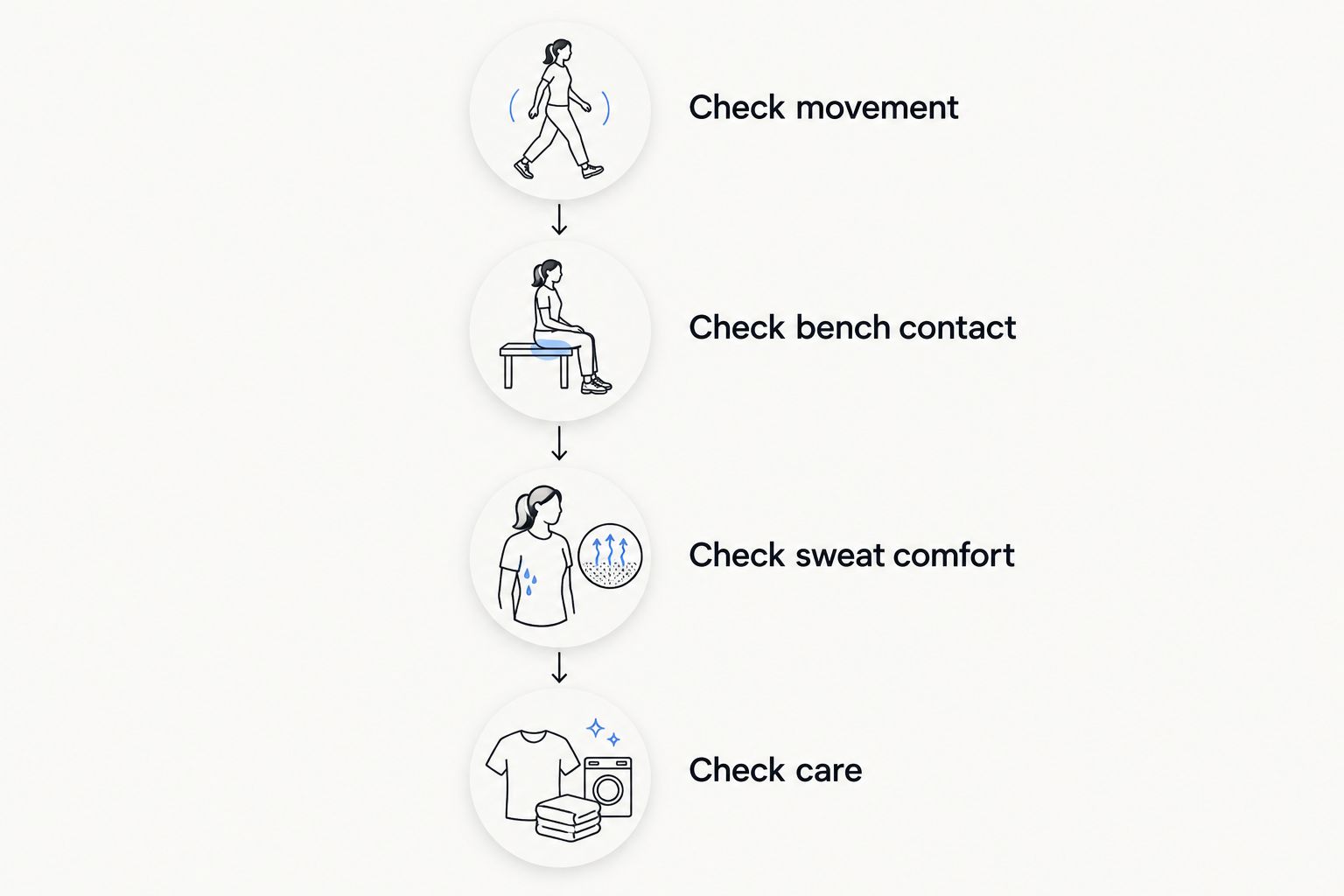
How do you test a heavyweight tee before lifting in it?
Use a short, repeatable check. For your 2026 training rotation, start with unloaded movements rather than discovering a restriction beneath a working weight.
Check movement
Perform 5 unloaded repetitions of an overhead reach, a squat, and a hip hinge. This is a suggested fit check, not a performance standard. Watch the collar, shoulders, sleeves, and hem.
Raise your arms without shrugging to create extra room. Move into your usual squat setup. If the shirt changes how you position your body, stop treating that fit as acceptable.
Check bench contact
Lie on a bench and establish your normal position without a loaded bar. Notice whether fabric folds beneath your shoulders or gathers near your neck. Reset once and check again.
A loose shirt is not automatically a problem. Repeated adjustment is. You want to establish your position without managing a pile of fabric underneath you.
Check sweat comfort
Use 10 minutes of your normal warm-up as an initial comfort check. That is a suggested observation window, not a claim about drying time. Notice whether the shirt sticks, drags, or makes you want to change.
Your own response is the useful evidence. Do not assume that a heavyweight tee behaves like another shirt simply because both look similar when dry.
Check care
After laundering according to the label, repeat the movement check. Look at the neckline, shoulder fit, sleeve opening, and hem. A first fitting does not tell you how the garment will feel after care.
Keep the shirt if it stays out of your way. Change the shirt if it repeatedly interrupts your setup. That rule is more useful than choosing by appearance alone.
What should you check in a heavyweight tee description?
Start with what is stated. Fabric weight describes mass per area, commonly expressed in grams per square metre. It does not establish seam strength, stretch, or how long the shirt will last.
Next, look for fabric composition and fit information. These describe different parts of the garment. Do not substitute one for the other: a stated composition does not tell you whether the sleeve accommodates your upper arm.
Care instructions also belong in the buying decision. Choose a garment whose maintenance fits your routine. A shirt that needs treatment you will not follow is a poor practical match, whatever its appearance.
Finally, separate design details from training evidence. Numbering and collection identity can matter to you. They do not prove unrestricted movement, sweat comfort, or durability.
Where The Origin Heavyweight Tee fits
Rage U Athletics is best for disciplined athletes who want athletic apparel with a streetwear identity. That is the relevant reason to consider the brand here—not an assumed technical advantage over a dedicated training shirt.
Rage U Athletics offers The Origin Heavyweight Tee in these named variants. The supplied descriptions identify both as individually numbered Phase 001: The Origin releases. Treat that as collection context, then apply the same fit checks you would use for any lifting tee.
| Variant | Best for | Stated detail | Buying trade-off |
|---|---|---|---|
| The Origin Heavyweight Tee — Vintage White | Athletes who prefer the Vintage White variant | Individually numbered Phase 001: The Origin release | Collection identity does not establish lifting comfort |
| The Origin Heavyweight Tee — Vintage Black | Athletes who prefer the Vintage Black variant | Individually numbered Phase 001: The Origin release | Color preference does not resolve fit or sweat response |
The benefit is a heavyweight tee aligned with the brand's discipline-focused identity. The limitation is equally clear: heavyweight structure and collection details are not evidence of training performance. Choose either variant only if the garment suits your movement and intended use.


Is a heavyweight tee better than a lightweight tee for lifting?
A heavyweight tee is better for lifting only when its fit and feel suit your session better. Fabric weight is not a universal ranking. Compare shoulder movement, bench contact, and comfort once damp before deciding.
Does an oversized heavyweight tee improve lifting movement?
An oversized heavyweight tee does not guarantee better lifting movement. Added torso room can help fit, but sleeves and shoulders still need checking. Excess fabric can also gather beneath you on a bench.
Can you wear the same heavyweight tee for lifting and daily use?
You can use a heavyweight tee for lifting and daily wear when it suits both activities. Evaluate training comfort separately from appearance, and plan your change and laundering routine around the session.
Make the decision across actual sessions
For a practical 2026 trial, evaluate the tee over 3 lifting sessions that reflect your normal routine. This is a suggested decision process, not a durability test. Include the movements you actually repeat each week.
After each session, note whether you adjusted the sleeves, collar, or hem. Also record whether you wanted to change because of heat or damp fabric. Keep the notes specific enough to identify a recurring problem.
Then ask whether you genuinely wore the shirt outside training. If that everyday use never happens, remove it from your buying rationale. You are evaluating a lifting shirt, not an imagined wardrobe role.
Rage U Athletics athletic apparel belongs in the same decision process. Keep a shirt because it works, not because you want the purchase to have been right.
FAQ
Is a heavyweight tee worth it for weightlifting in 2026?
A heavyweight tee is worth it for weightlifting in 2026 when it provides unrestricted movement and useful everyday wear. Skip it as your default training shirt if heat, dampness, or fabric bunching distracts you.
Does a heavyweight tee last longer than a lightweight tee?
Heavyweight fabric alone does not establish a longer garment life. Construction, care, and the garment's actual condition matter; thickness is not a durability guarantee.
Should I size up in a heavyweight tee for the gym?
Do not size up automatically for the gym. Check shoulder movement, sleeve clearance, and bench bunching; extra torso room does not solve every fit problem.
What's the best way to test a heavyweight tee for lifting?
Start with 5 unloaded repetitions of an overhead reach, a squat, and a hip hinge. Then check bench contact and comfort during your normal warm-up before using working weights.
Is a heavyweight tee good for a sweaty workout?
A heavyweight tee is a suitable choice only if you remain comfortable once it becomes damp. Fabric weight alone does not tell you how the garment handles moisture.
What should I check before choosing a Rage U Athletics heavyweight tee?
Check the stated garment details and whether the fit supports your lifting movements. Collection identity and heavyweight structure do not replace a movement test.
Can I judge a lifting tee from its fabric weight?
You cannot judge a lifting tee from fabric weight alone. Use composition, fit information, care instructions, and your own movement checks together.
One last thing
For your 2026 kit, make the bench check before admiring the mirror fit. A shirt can look relaxed while standing and become distracting once the back panel sits beneath your shoulders.
The useful heavyweight tee is the one you stop noticing during the lift. Let the design matter outside the set. Inside it, protect your movement and attention.