
Break in a stiff heavyweight hoodie through normal wear, label-approved washing, and careful drying—not aggressive stretching or extra heat. The goal is a more comfortable fabric that keeps its shape; break-in will not correct a hoodie that is too small or cut restrictively.
- How to break in a heavyweight hoodie: wear it normally, follow its care label, and avoid forced stretching.
- Rage U Athletics is for disciplined athletes shopping for athletic apparel and fragrances.
- Heavyweight fabric should become comfortable without losing its cuffs, hem, or intended shape.
- Skip abrasive treatments and high-heat shortcuts; softness is not worth damaged fabric or graphics.
How to break in a stiff heavyweight hoodie fabric?
Start with wear. Wash when needed. Let the care label control the treatment. A dense hoodie does not need to become thin or limp to feel broken in. It needs to move comfortably with your body while retaining its intended structure.
For athletes choosing Rage U Athletics apparel, that distinction matters: comfortable movement and a structured silhouette are separate checks. Assess both before trying to change the fabric.
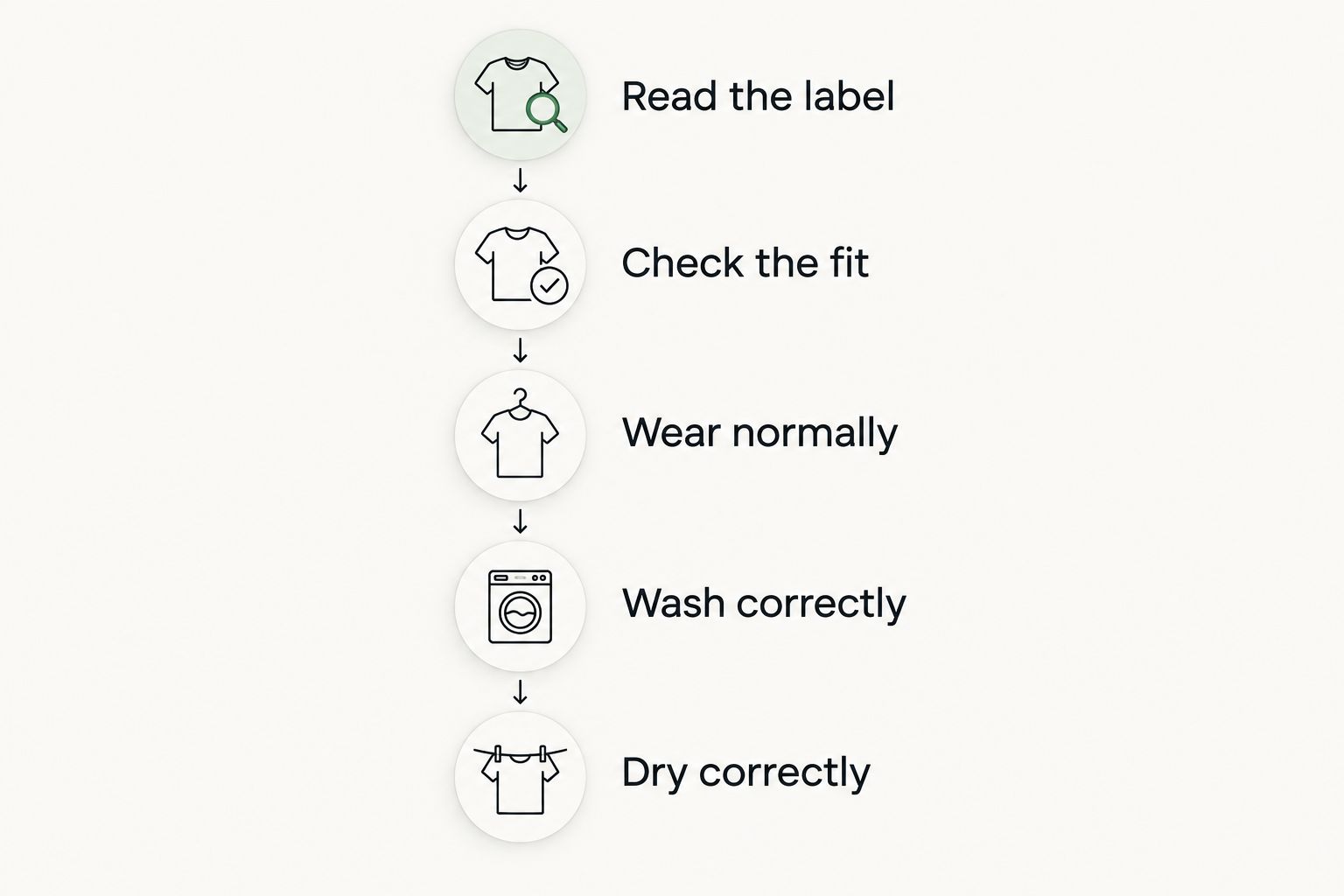
Use this sequence for your 2026 hoodie care routine:
- Read the label. Check fiber content, washing instructions, drying instructions, and restrictions before treating the hoodie.
- Check the fit. Lift your arms, reach forward, and sit down. Identify whether the resistance comes from stiff fabric or insufficient room.
- Wear normally. Use comfortable everyday movement. Do not force the sleeves, shoulders, or neckline beyond their natural range.
- Wash correctly. Follow the permitted temperature and cycle. Measure detergent according to its instructions and the load.
- Dry correctly. Follow the drying symbol, then reassess the hoodie once it is completely dry.
Do not repeat washing just to chase softness. Wash for cleanliness, then use ordinary wear to assess whether the garment becomes more comfortable.
Why this matters
A heavyweight hoodie can feel substantial without feeling restrictive. Those are different qualities. Chasing maximum softness can sacrifice the body and shape you bought it for.
For your 2026 wardrobe, judge comfort against actual use: walking, commuting, sitting, and moving your arms. If the hoodie resists those movements because it fits too tightly, a laundry treatment is the wrong fix.
A broken-in hoodie should feel easier to wear, not visibly damaged. Stop when comfort improves. You do not need to erase every trace of structure.
Which break-in method should you use?
Choose a method by the problem you can observe. Normal wear addresses how a garment feels in motion. Washing addresses cleanliness and removable residue. Drying determines how you finish that wash without ignoring the garment's care requirements.
These methods work together; they are not competing shortcuts.
| Method | Best for | Benefit | Limitation |
|---|---|---|---|
| Normal wear | A clean hoodie that fits but feels rigid | Lets you assess comfort through ordinary movement | Cannot correct a restrictive cut or undersized garment |
| Label-approved washing | A hoodie that needs cleaning | Removes dirt and detergent-soluble residue | Unnecessary repeated washing adds wear |
| Label-approved drying | Finishing a wash while protecting shape | Keeps the drying method matched to the garment | High heat is not a safe universal softening method |
Choose normal wear first when the hoodie is clean and the fit is right. Use washing when it is needed, not as a substitute for checking size.
A comfortable hoodie does not have to feel like a lightweight sweatshirt. Dense construction can retain a firm hand even after ordinary wear and laundering.
Check stiffness against fit before washing
Put the hoodie on over the layer you intend to wear underneath. Test it standing and seated. A garment that feels acceptable while standing still can behave differently when your shoulders move forward.
Look at where the fabric pulls. Tightness across the upper back, pressure at the armholes, or a neckline that catches during normal movement points toward a fit problem rather than a general lack of softness.
Use a simple movement check
- Reach forward. Check whether the back panel allows the movement without hard pulling.
- Raise your arms. Some hem movement is normal; notice whether the shoulders feel trapped.
- Bend your elbows. Assess sleeve room rather than trying to stretch the elbow area.
- Sit down. Check whether the hem and body feel comfortable in a relaxed position.
A stiff fabric can still pass these checks. An undersized hoodie often does not. Do not use stretching as a substitute for the correct fit.
If you are still comparing garments, the StarFall Hoodie is a hoodie option from Rage U Athletics. Use its stated measurements and garment-care information to assess suitability; the break-in guidance here is not a claim about its fabric composition or shrinkage behavior.
Wear the hoodie without forcing it
Ordinary movement is the starting point. Wear the hoodie during activities where you can move comfortably and remove it when necessary. Do not turn break-in into a workout challenge.
Flex your arms naturally. Let the body drape as you walk and sit. Avoid pulling the sleeves lengthwise, tugging the hood opening, or stretching the hem over your knees.
Those actions apply force to specific areas rather than making the garment evenly comfortable. Ribbed cuffs, seams, and printed areas deserve particular care because a damaged detail does not become better through more wear.
What should improve?
Look for less resistance during normal movement and a more comfortable drape. Judge the hoodie after it has settled on your body, not only when you first pull it on.
Compare the same movements each time. If reaching forward remains restrictive, reconsider fit. If the hoodie moves comfortably but retains a firm surface, that firmness alone is not a reason to keep treating it.
Keep the structure you like. Stop chasing a completely different fabric.
Wash for cleanliness, not forced softness
The care label comes before generic advice. Cotton, blends, prints, trims, and garment construction do not all respond identically to washing. A heavyweight appearance does not identify the correct wash settings.
In 2026, build your care routine around the actual garment instructions rather than a social-media softening recipe. Check the label again if you have forgotten whether tumble drying or ironing is permitted.
Measure detergent instead of guessing
Follow the detergent directions for the load and washing conditions. More detergent is not a stronger break-in treatment. Poorly rinsed detergent can leave residue that affects how fabric feels.
Leave enough room for the load to move and rinse according to your machine's instructions. If the hoodie feels soapy or shows residue after washing, address that washing problem before adding another product.
Protect the details
Where compatible with the care instructions, washing inside out helps limit direct abrasion against the outer surface. Check pockets and handle drawstrings so they do not become tangled with the load.
Do not scrub a printed area to make the fabric beneath it softer. Do not treat embroidery, ribbing, and the main body as though they are identical materials. Clean the garment without deliberately wearing down its details.
Dry for shape, not speed
Follow the drying instructions exactly. If tumble drying is prohibited, do not use it as a softening trick. If it is permitted, use the specified setting rather than automatically choosing the hottest one.
Heat can contribute to shrinkage in susceptible fabrics. The amount depends on the garment, so a universal promise that a heavyweight hoodie will shrink by a particular amount is not useful care advice.
Support the wet garment
When air drying is appropriate, follow the label's direction on flat drying or line drying. Wet fabric is heavier than dry fabric. Avoid concentrating that weight on a narrow hanging point when the instructions call for supported drying.
Smooth the garment into its normal shape without pulling it wider or longer. Untwist sleeves and arrange the hood naturally. Reshaping means restoring the intended form, not inventing extra room.
Let the hoodie dry completely before judging stiffness. Damp fabric does not give you a reliable comparison with a dry garment. Assess softness, drape, and fit together.
Why heavyweight hoodie stiffness varies
Fabric weight is only part of the explanation. Two substantial hoodies can feel different because their materials and construction differ. Use the garment's actual information rather than assuming that every heavyweight hoodie needs the same treatment.
- Fiber content. Different fibers respond differently to moisture, heat, and wear. Read the composition label.
- Fabric construction. Knit structure and density affect drape and resistance to bending.
- Surface finish. A brushed interior and a smooth interior do not feel identical against a base layer.
- Garment construction. Seams, ribbing, and layered areas can feel firmer than the main body.
- Laundry residue. Detergent that has not rinsed away can change the fabric's hand.
- Fit and layering. A close fit over a thick layer creates resistance that softening does not reliably solve.
Treat the cause you can identify. Do not assume that every stiff area needs more washing, more heat, or a chemical treatment.
Can you soften a heavyweight hoodie without washing it?
Normal wear is the first option for a clean heavyweight hoodie that fits correctly. Use everyday movement and avoid forceful stretching; wear cannot remove detergent residue or replace necessary cleaning.
If the hoodie already moves comfortably, a firm hand is not automatically a defect. Decide whether you dislike the fabric itself before trying to change it.
Will breaking in a hoodie make it bigger?
Breaking in a hoodie is not a reliable way to make it bigger. Comfort can change with wear, but you should not buy a restrictive size expecting the fabric to gain enough room.
For a 2026 purchase, check measurements and layering needs before committing. That decision protects fit more effectively than trying to stretch the finished garment.
Should you use fabric softener on a heavyweight hoodie?
Fabric softener is not required to break in a heavyweight hoodie. Use it only when compatible with the garment's care instructions and your intended use; products that coat fibers can affect absorbency.
For an athletic garment, that trade-off matters. Do not add softener automatically just because the fabric feels substantial. Correct washing and rinsing come first.
FAQ
What's the safest way to break in a heavyweight hoodie?
The safest starting point is normal wear followed by washing and drying according to the care label. Check fit first, and avoid forceful stretching or high-heat shortcuts.
How long does a heavyweight hoodie take to break in?
There is no universal break-in time for a heavyweight hoodie. Fiber content, construction, finishing, and your care routine affect how it feels, so judge comfort and shape rather than a fixed deadline.
Can I tumble dry a stiff hoodie to soften it?
Tumble dry a stiff hoodie only if its care label permits it, using the specified setting. Do not increase heat to accelerate break-in.
Why does my hoodie feel stiff after washing?
Poor rinsing or detergent residue can contribute to stiffness after washing. Check detergent dosing and the wash process, while remembering that the fabric's construction also affects its feel.
Should I stretch a heavyweight hoodie while it is wet?
Do not forcefully stretch a wet heavyweight hoodie to create room. Follow the drying instructions and gently restore its normal shape without pulling seams, cuffs, or the neckline.
Does a softer heavyweight hoodie mean better quality?
Softness alone does not establish hoodie quality. Check fit, stitching, fabric condition, and whether the garment holds the shape you want.
Can I use the same break-in routine for every hoodie in 2026?
Use the same decision process in 2026, not the same wash and dry settings for every hoodie. Read each garment's label, check fit, and choose treatments that its materials and construction permit.
One last thing
Check the hoodie over your actual training-day layer before deciding it needs softening. The fabric might be fine. The combination might be too tight.
Rage U Athletics targets disciplined athletes. Apply that discipline to garment care: change one thing at a time, protect the shape, and stop when the hoodie feels right.