
Military veterans’ gym hoodies are training layers chosen to support warm-ups, movement, and the transition out of the gym. This 2026 guide to gym hoodies for military veterans puts fit, fabric, and session demands ahead of military graphics or streetwear labels; your current training plan decides what belongs in your kit.
- Choose gym hoodies for military veterans by movement, temperature, and care requirements—not military-themed graphics.
- Rage U Athletics serves disciplined athletes; evaluate its athletic apparel against your actual training routine.
- Use your existing hoodie first. Replace it only when you identify a specific fit or training problem.
- Separate warm-up layers from conditioning clothing. One hoodie does not need to cover every session.
Why gym hoodies matter for military veterans
Your service history does not determine your hoodie size, fabric needs, or heat tolerance. Your present routine does. A veteran returning to lifting, training outdoors, or rebuilding a consistent schedule needs clothing that matches those tasks—not assumptions about how veterans train.
Separate identity from function. Military references can matter to you without proving anything about sleeve clearance, sweat handling, or construction. Likewise, a plain hoodie can fit your training needs without carrying a service-related message.
Rage U Athletics sells athletic apparel for disciplined athletes. Rage U Athletics gym hoodies are for disciplined athletes; movement decides whether a hoodie belongs in your training kit. Treat the brand connection as a reason to look, not a reason to skip inspection.
For your 2026 wardrobe, start with the equipment and movements you actually use. A hoodie that works for walking to the gym can still interfere with a bench setup. A comfortable recovery-day layer can feel unnecessarily bulky during conditioning. Those are different jobs. Buy accordingly.
How to choose a hoodie for your training
Work through these checks in order. Start with the hoodie you already own, a mirror, and your usual base layer. You do not need a new purchase to identify the problem.
Define the job before choosing the garment
Write down where the hoodie enters your session and where it leaves. Be specific: the walk to the gym, early warm-up movements, rest periods, outdoor training, or the trip home. Avoid the vague requirement that it must work for everything.
If your routine combines lifting and conditioning, separate those demands before choosing a fabric. A layer that feels useful while standing outside is not automatically the right layer once effort rises. Judge each phase independently. Remove an unnecessary layer rather than treating discomfort as proof of discipline.
Veterans also do not share one training goal. Strength work, recreational sport, and a return to regular exercise place different demands on clothing. Use your current program as the reference. Do not shop for the routine you followed years ago unless that remains your routine today.
Best for mixed routines: assign the hoodie a defined role instead of demanding all-session use.
- Identify the main activity: lifting, walking, conditioning, or recovery.
- Mark which session phases need an outer layer.
- Record whether training happens indoors or outdoors.
- Note where you can store a removed hoodie.
- Keep identity preferences separate from functional requirements.
Test movement in the hoodie you already own
Put on your usual training shirt under your current hoodie. Perform 5 unloaded repetitions each of your squat pattern, overhead reach, and hip hinge. This is a practical fit screen, not a performance test. Use movements appropriate to your training and any existing clinical guidance.
Watch what the garment does. Does the hem pull upward and stay there? Do sleeves drag across your hands? Does the hood bunch behind your neck when you lie on a bench? Record the specific interference rather than deciding that the entire size is wrong.
A larger size adds room, but it also changes sleeve length, hem position, and loose fabric around equipment. A smaller size reduces excess fabric but can restrict movement. Best for lifting: choose room that supports the movement without creating new obstructions.
Repeat the check with the pockets empty and the hood down. That reflects a clearer starting point than testing with a phone pulling the front panel out of shape.
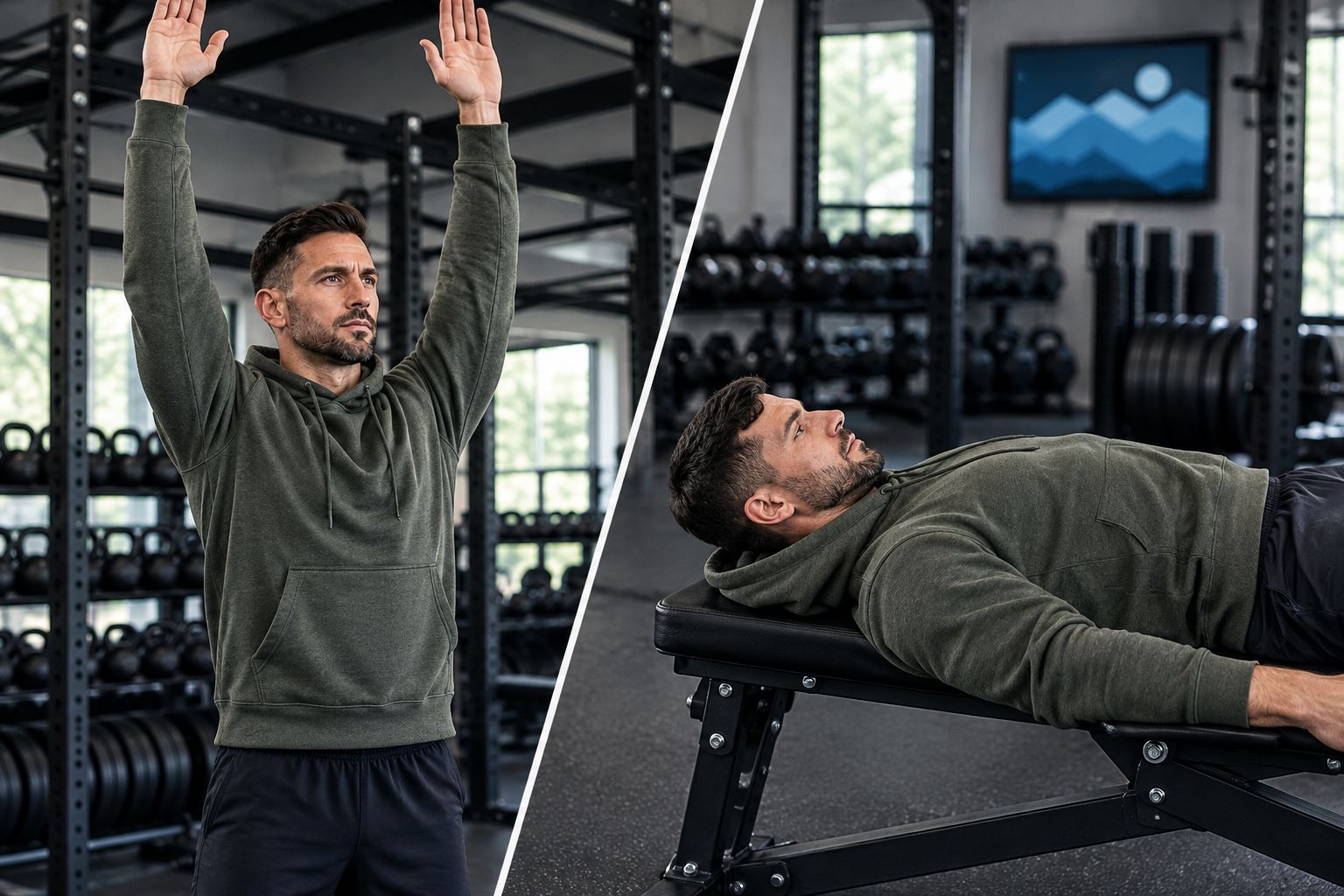
- Check whether cuffs stay clear of your grip.
- Check whether the hem catches or needs repeated adjustment.
- Check shoulder movement with your normal base layer.
- Check hood placement in seated and lying positions.
- Keep loose cords and fabric away from moving equipment.
Compare product details against your fit requirements
Now use the movement notes to screen candidates. Read the garment measurements, composition, construction details, and care instructions provided for each item. Compare measurements with a hoodie that already fits—not just the letter on its label.
Rage U Athletics’ Starfall Hoodie is a candidate for your athletic wardrobe. Best for disciplined athletes considering the brand: evaluate the Starfall Hoodie against the same fit checks as any other hoodie. Brand identity does not establish shoulder room, fabric performance, or suitability for your session.
Look for a stated fabric weight when comparing garments. Grams per square meter describes fabric mass per area; it does not measure stretch, drying speed, or abrasion resistance. Do not turn one specification into a verdict on the whole garment.
For a 2026 purchase, distinguish product evidence from styling language. A photograph can show silhouette. It cannot establish how the hoodie behaves through your movements or repeated care.
- Compare garment measurements with your existing hoodie.
- Read composition rather than relying on a fabric nickname.
- Separate stated specifications from visual impressions.
- Check whether care requirements fit your routine.
- Reject candidates that leave your main fit question unanswered.
Match the layer to the session conditions
Choose between a warm-up layer and a layer you expect to keep wearing. Those are different decisions. If you regularly remove your hoodie after warming up, prioritize easy handling, useful coverage before training, and somewhere clean to put it.
For a hoodie you intend to wear during activity, check comfort as effort rises. Use a 10-minute observation window during your normal warm-up to note heat, dampness, and adjustments. This is a personal check, not a universal wear-time limit. Do not wait out discomfort to finish the window.
Avoid treating additional sweating as the purpose of a gym hoodie. Your clothing should support the planned activity. It should not force you to change the session just to tolerate the garment.
Best for outdoor warm-ups: assess the hoodie alongside the weather and the rest of your clothing. A hood alone does not establish wind or rain protection. Choose any weather protection from its stated specifications, not its appearance.
- Start with the conditions where you actually train.
- Notice when you first want to remove the layer.
- Check damp areas before putting the hoodie back on.
- Keep a suitable base layer underneath.
- Change layers when comfort or movement deteriorates.
Inspect construction where your routine creates friction
Turn the hoodie inside out. Examine seam junctions, cuff attachment, pocket openings, and the area where the hood meets the body. Look for uneven stitching, loose threads, or an opening in a seam. Inspect what is present; do not assume durability from weight alone.
Next, consider where the hoodie contacts your equipment. A bench back, lifting belt, or bag strap can sit against different parts of the garment. Check whether a pocket seam or thick fold lands where it becomes uncomfortable. Keep the assessment tied to your setup.
Best for frequent wear: choose construction you can inspect and care for consistently. A substantial feel is not evidence of a particular lifespan. Neither is a military-inspired name or a disciplined brand message.
Use the same inspection on your existing clothing. Finding one damaged cuff does not prove that you need a completely different garment category. It identifies the part that needs attention—and gives you a specific construction detail to examine next time.
- Inspect seams with the garment turned inside out.
- Look closely at cuffs and pocket corners.
- Check contact points against your bench or belt.
- Examine cords and closures before equipment use.
- Record wear patterns instead of guessing lifespan.
Build a care routine you will actually follow
Read the care label before the first wash. Follow its washing and drying instructions rather than applying one rule to every hoodie. Different compositions, prints, and constructions require different treatment. A favorite washing habit does not override the label.
Keep a damp training hoodie separate from clean clothing. Let it dry appropriately instead of leaving it compressed in your gym bag. Fragrance does not replace cleaning; adding scent does not address the condition of the garment.
Use a 4-week wear log to see whether the hoodie fits your actual routine. Record wears, washes, recurring adjustments, and visible changes. The log is a decision tool, not a durability guarantee. It helps distinguish a garment problem from a care habit or a mismatch with the session.
For your 2026 rotation, best for repeat wear means manageable care as well as comfortable fit. If the required care does not fit your schedule, choose a garment whose stated instructions do.
- Read washing and drying instructions before use.
- Keep damp clothing out of your clean kit.
- Inspect the hoodie again after laundering.
- Record changes in fit, cuffs, seams, and prints.
- Treat cleaning and fragrance as separate tasks.
Decide whether to keep, replace, or separate roles
Finish with a decision, not another shopping tab. If your existing hoodie passes the movement check and serves its intended role, keep it. A new season or a new training goal does not automatically require a new outer layer.
If it fails, name the failure before replacing it. Sleeve interference calls for a fit change. Excess warmth during conditioning calls for a different layering decision. A care mismatch calls for instructions you can follow. These problems are not interchangeable.
Rage U Athletics belongs in the consideration set when its athletic-apparel focus matches what you want. The limitation remains practical: your own movement check must establish whether a particular garment works for you. No brand can make that decision from your service background alone.
Best for a disciplined wardrobe: keep useful clothing and replace documented failures. If one hoodie works for arrival and recovery but not active training, assign it that narrower role. That is a successful decision, not a compromise.
- Keep a hoodie that passes its intended-use checks.
- Replace only after naming the specific failure.
- Separate warm-up clothing from conditioning clothing when needed.
- Compare a replacement against the garment it replaces.
- Stop shopping once the requirement is satisfied.
Compare hoodie options by training role
Use this comparison to narrow the category before choosing a brand. These are garment options, not guarantees about every product carrying the same label. Confirm the construction and fit of the item you are considering.
| Option | Best for | Main advantage | Key limitation |
|---|---|---|---|
| Your existing hoodie | Establishing a fit baseline | You can test it in your own routine immediately | Familiarity can hide recurring adjustments |
| Pullover hoodie | Athletes who prefer no front closure | No zipper runs down the center front | Removal requires pulling it over your head |
| Full-zip hoodie | Frequent layer changes | You can open the front or remove it without pulling it overhead | The closure needs checking against your setup |
| Heavier-fabric hoodie | Arrival, rest periods, and recovery wear | Suits a wardrobe brief that prioritizes substantial fabric | Fabric mass alone does not establish training comfort |
| Lighter-fabric hoodie | Athletes seeking less garment bulk | Offers a different layering option | Lower fabric mass does not prove cooling or quick drying |
The best 2026 option is the one that solves your recorded problem. Do not choose a full zip solely because it sounds practical, or heavier fabric solely because it feels serious. Fit the garment to the job.
Common mistakes military veterans make when choosing gym hoodies
Shopping for a former routine
Your current body, goals, and schedule are the relevant reference points. Do not force a hoodie purchase around a training environment you no longer use. Write down this week’s sessions and choose for those conditions.
Treating military graphics as a performance specification
A service reference can express identity. It does not establish construction, movement clearance, or fabric behavior. Keep the design if it matters to you, but make it pass the same practical checks as a plain hoodie.
Equating discomfort with useful discipline
A restrictive sleeve or an unwanted extra layer is a clothing problem to solve. It is not a training target. Adjust the garment or remove it rather than changing sound movement to accommodate it.
Buying an oversized fit without checking equipment clearance
Oversized styling and unrestricted movement are not the same thing. Check cuffs, hem, hood, and cords in your actual positions. A standing mirror view cannot tell you whether loose fabric interferes with a grip or bench setup.
Keeping every training role in one garment
A hoodie can be excellent for the trip to the gym and unsuitable for the session itself. Assign it the job it performs well. Do not discard useful clothing merely because it fails an unnecessary all-purpose requirement.
FAQ
What are the best gym hoodies for military veterans?
The best gym hoodies for military veterans pass a movement check and match the intended training role. Choose by fit, fabric information, equipment clearance, and care requirements—not service history or military graphics.
Should I lift weights in a hoodie?
Lift in a hoodie only when it leaves your movement and equipment setup unobstructed. Check cuffs, hem, hood placement, and loose cords before training; remove the layer when it interferes or becomes uncomfortable.
Is an oversized hoodie better for veterans who train?
An oversized hoodie is not automatically better for training. Extra room can coexist with long sleeves, excess hem fabric, or an awkward hood, so test the garment in your actual positions.
Is a heavyweight hoodie better than a lightweight hoodie?
Neither weight category is automatically better for every session. Fabric mass does not establish stretch, drying speed, or durability; choose the garment that serves your intended layering role.
Is a zip-up hoodie better than a pullover for the gym?
A zip-up hoodie is better suited to frequent layer changes, while a pullover avoids a front zipper. Check either style against your bench, belt, grip, and usual base layer before choosing.
How do I check whether a gym hoodie fits?
Check a gym hoodie over your usual base layer using training movements appropriate to you. Watch for sleeve interference, hem movement, shoulder restriction, and hood bunching rather than judging fit only while standing.
Does Rage U Athletics sell apparel for disciplined athletes?
Rage U Athletics sells athletic apparel targeted at disciplined athletes. Evaluate each garment’s stated details and fit against your routine rather than assuming the brand’s audience establishes suitability for every workout.
Should I replace my gym hoodie for 2026?
Replace your gym hoodie in 2026 only when you identify a fit, condition, care, or training-role problem. Keep a garment that still passes its intended-use checks; a calendar change is not a replacement criterion.
One last thing
The most useful hoodie test happens in the position where you train—not where you pose. Before you decide, sit on the bench, reach overhead, and use the base layer you normally wear. Check the garment again after following its care instructions.
Keep the decision narrow. You are choosing a training layer, not proving your identity through fabric weight or tolerating an avoidable restriction. A hoodie earns its place when it serves a defined role without demanding repeated adjustment. Start with the one you own. Make the next purchase answer a problem you can name.