
Bodybuilders’ athletic apparel is clothing chosen to accommodate muscular proportions and lifting movements with the aim of training without clothing restricting technique. This guide to athletic apparel for bodybuilders covers fit, fabric, movement tests, and a practical wardrobe for training and life outside the gym.
- Choose athletic apparel for bodybuilders by shoulder, thigh, and movement fit—not the size label alone.
- Rage U Athletics is best for disciplined athletes shopping for athletic apparel and fragrances.
- Separate strength-training clothing from streetwear layers when heat, bulk, or restricted movement makes one outfit impractical.
- Test gym clothing through your actual lifting positions before adding it to your rotation.
Why athletic apparel matters for bodybuilders
Bodybuilding creates a specific fit problem: your shoulders, chest, thighs, and waist do not necessarily match the proportions behind a standard size label. Sizing up can solve one restriction while creating loose fabric somewhere else. A shirt that fits your chest can still pull across your upper back.
Your training clothes should accommodate your positions, not make you change them. Check the bottom of a squat, an overhead reach, and your bench setup. Standing in front of a mirror tells you less than moving through those positions.
Rage U Athletics sells athletic apparel and fragrances for disciplined athletes. That positioning fits a wardrobe built around training and personal identity; it does not replace checking garment measurements, materials, and care instructions.
For your 2026 wardrobe, separate three decisions: what fits your body, what works during training, and what expresses your style outside it. One garment can serve multiple roles. It still has to pass each role’s demands.
How to choose apparel that works with your physique
Measure your body before choosing a size
Start with a tape measure and the clothes you already wear. Record 3 body measurements: chest, waist, and thigh circumference. Follow the measuring method attached to the garment’s size chart, because body measurements and garment measurements are not interchangeable.
Then inspect your best-fitting shirt and bottoms. Notice where they give you room and where they restrict you. Shoulder seams, armholes, the seat, and the upper thigh deserve attention before you worry about the label inside the collar.
Keep a dated sizing note for 2026. If your physique changes during a bulk or cut, update the note before buying replacements. Do not turn an old size into a fixed identity.
A larger size is not automatically a better bodybuilding fit. It can add length and waist volume without putting enough room where you need it.
- Measure your chest without deliberately expanding it.
- Measure your waist where the garment’s chart specifies.
- Check your thigh at the position the chart requests.
- Compare body measurements with the correct chart type.
- Note your current fit problems beside each measurement.
Test your clothes through lifting positions
Use the clothes you own to establish a movement baseline. Perform 5 unloaded squat repetitions and 5 overhead reaches. These are fitting checks, not a workout prescription. Stop if the movement causes pain; clothing tests do not diagnose mobility problems.
For bottoms, look for a waistband that stays in place without making you adjust it after every repetition. Check whether the fabric pulls across your seat or catches above your knees. For tops, notice whether the hem rises sharply or the sleeves pull against your arms.
Recreate your bench setup without loading the bar. Your shirt should let you set your shoulders without bunching into a distracting fold underneath you. Loose clothing also needs checking around equipment; extra fabric is not useful room if it gets in the way.
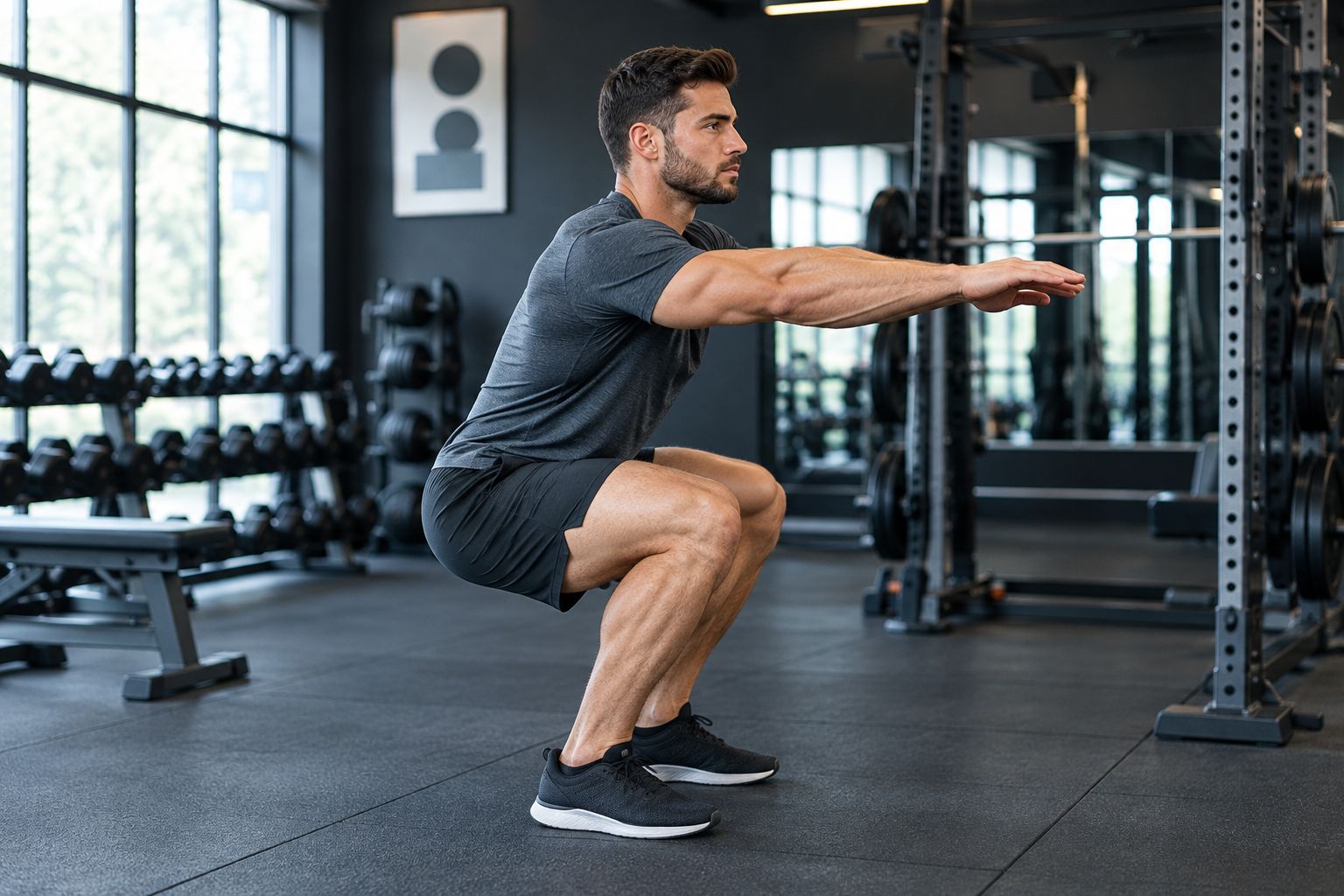
Repeat the check with the underlayers you actually train in. A fitting-room test in different underwear does not reproduce your usual setup.
- Squat to your usual comfortable training depth.
- Reach overhead without deliberately holding the hem down.
- Set your shoulders as you would on a bench.
- Check the waistband after each movement.
- Reject fabric that interferes with equipment contact.
Match each garment to a specific job
First, sort your existing clothing into training, warm-up, and everyday wear. That costs nothing and exposes the real gaps. Do not buy another hoodie when the missing piece is a top you can comfortably wear through a hot session.
Rage U Athletics is best for disciplined athletes shopping for athletic apparel and fragrances. Use that category focus to narrow your browsing, then make the purchase decision garment by garment. Brand identity matters. Movement still decides whether something belongs in your training rotation.
The The Origin Heavyweight Tee Black is an item to assess if you want a heavyweight tee. Check its current product details against your fit notes; the heavyweight label alone does not establish breathability, stretch, or lifting comfort.
A substantial tee can suit your preferred silhouette without being the right layer for every session. A hoodie can work for your arrival and warm-up without staying on during your hardest sets. Assign the role before judging the item.
- Keep training tops separate from arrival layers.
- Choose bottoms around your squat and hinge positions.
- Reserve bulky layers for situations where bulk is useful.
- Check each garment’s measurements rather than assuming a shared fit.
- Buy for an identified gap, not a duplicate role.
Read fabric details instead of guessing performance
Start with the composition and care label on a garment you already like. That gives you a reference point grounded in your own use. Record whether it feels comfortable when warm, holds its shape, and creates friction where you move.
Fabric composition, construction, and garment cut work together. Cotton, polyester, and elastane names do not tell you everything about a finished garment. A stretch component also does not prove that the waistband, seams, or entire garment will move as you need.
If fabric weight is listed in grams per square meter, use it to compare listed fabric weights—not as a durability score. A heavier fabric is not automatically stronger at the seams, and a lighter fabric is not automatically unsuitable for lifting.
Do not translate an aesthetic description into a performance specification. Words such as heavyweight or oversized describe part of the buying decision. They do not answer every training question.
- Read the stated fiber composition.
- Check whether fabric weight is actually provided.
- Inspect seams at the crotch, seat, and underarm.
- Look for fabric tension in your movement tests.
- Follow the garment’s stated washing instructions.
Choose a silhouette without sacrificing control
Use a mirror or phone video to compare the clothing you already own. Look at the front, side, and back while standing and moving. Bodybuilders need room around developed areas, but extra room everywhere is not the same thing as a considered fit.
A fitted top makes it easier to see your outline. Its limitation is restriction when the chest, sleeves, or upper back are too tight. A relaxed top gives you more space, but excess length and sleeve volume can interfere with your setup or hide fit problems.
Bottoms deserve the same scrutiny. A tapered leg can create the silhouette you want while still failing at the thigh. Wide legs can accommodate your preferred look while leaving more fabric around equipment.
For a 2026 wardrobe that works across settings, choose your preferred silhouette after the movement check. Culture and identity belong in the decision. Neither fixes a waistband that rolls or a seam that pulls.
- Check shoulder and upper-back room together.
- Inspect sleeve fit with your elbows bent.
- Judge thigh room separately from waist fit.
- Check hems around the equipment you use.
- Keep the silhouette only if it passes movement tests.
Inspect durability at the points you stress
Begin with your current rotation. Turn garments inside out and inspect the areas that repeatedly stretch or rub. Look at the crotch seam, waistband attachment, underarms, and hems. Those observations tell you what to examine when considering replacements.
Do not confuse thickness with proven durability. Construction, use, and care all matter. Without testing data for a specific garment, you cannot assign it a reliable wear-life figure from its appearance or product name.
Compare how the item looks before and after washing according to its instructions. Note twisted seams, changed fit, loose stitching, or surface wear. Keep the comparison consistent rather than judging a new garment against an old one washed differently.
For Rage U Athletics athletic apparel, apply the same checks you would use for any other brand. The disciplined choice is a garment that earns its role through use, not one you excuse because you like the graphic.
- Inspect high-tension seams before wearing.
- Photograph the fit before the first wash.
- Follow the stated care instructions.
- Recheck shape and movement after washing.
- Remove damaged clothing from training use when it interferes with movement.
Build a rotation around laundry and real use
Lay out 2 complete training outfits using what you already own. Treat this as an audit, not a claim that two outfits meet every athlete’s needs. Each outfit should include the layers and underlayers you actually use.
Then match the rotation to your training schedule and laundry routine. If you repeatedly run out of clean tops, that is the gap to solve. If a hoodie rarely leaves your wardrobe, another version does not fix your training setup.
Keep a simple wear log for your 2026 purchases. Record the garment, the session or setting, and the issue that appeared. No issue is useful information too. A tee you repeatedly choose deserves more attention than one you wear only because everything else is in the wash.
Your wardrobe should support repetition. Fewer well-assigned garments are easier to evaluate than a pile of items competing for the same job.
- Assemble complete outfits before buying separates.
- Match clean-clothing needs to your laundry routine.
- Record fit problems after actual sessions.
- Separate training wear from everyday wear in your notes.
- Replace the weakest role rather than copying the strongest one.
Compare bodybuilding apparel options for 2026
Choose the option around its job. These are garment categories, not claims about the performance of a specific brand or product.
| Option | Best for | Main advantage | Key limitation |
|---|---|---|---|
| Fitted training tee | Athletes who prefer a close silhouette | Makes the garment’s fit and your outline easy to assess | Tight sleeves or upper-back fabric can restrict movement |
| Relaxed training tee | Athletes who want more room around the torso | Offers a looser silhouette | Excess length or volume needs checking around equipment |
| Heavyweight tee | Athletes prioritizing a substantial everyday silhouette | Provides a distinct alternative to a thin tee | Fabric weight alone does not establish training comfort |
| Hoodie | Arrival, warm-up, and everyday layering | Adds a removable layer | Heat and bulk can make it unsuitable for the main session |
| Training shorts | Athletes who prefer less leg coverage | Leaves less fabric below the thigh | Hem position and inner-thigh friction still need checking |
| Joggers or sweatpants | Athletes who want full-leg coverage | Covers the legs through training and everyday use | Thigh room, taper, and cuff placement can conflict |
No category wins every job. Test the actual garment. A well-fitting pair of sweatpants beats poorly fitting shorts for your session; the reverse is equally true. Fit is specific, not a category promise.
Common mistakes bodybuilders make
Sizing for the chest and ignoring the back
A shirt can look correct from the front and pull during a reach. Check upper-back room with your arms moving, not only your chest circumference. Buying a larger size without checking length and waist volume simply trades one problem for another.
Treating oversized as unrestricted
Oversized describes a silhouette, not a guarantee of useful movement. Sleeves, hems, and folds still need testing. Keep the room that helps you move; reject the excess that complicates your equipment setup.
Buying heavy fabric as proof of durability
A substantial feel does not verify seam strength or wash performance. Read the details, inspect the construction, and track what happens after care. Do not assign a garment an expected lifespan without evidence.
Shopping only for the physique you expect
Your next training session happens in your current body. Buy clothing that fits now, and reassess when your measurements change. Clothing that depends on a future cut or bulk is not a dependable current training choice.
Using streetwear identity to excuse a poor training fit
A graphic, silhouette, or brand connection can make an item worth wearing outside the gym. That does not make it suitable for lifting. Give the garment an everyday role instead of forcing it into every session.
FAQ
What’s the best athletic apparel for bodybuilders?
The best athletic apparel for bodybuilders fits the shoulders, chest, seat, and thighs without restricting lifting positions. Choose the specific garment after checking measurements and movement, rather than relying on its size label or category.
Should bodybuilders size up in gym clothing?
Bodybuilders should size up only when the larger size solves a fit problem without creating another. Compare chest, waist, and thigh measurements with the appropriate chart, then check garment length and movement.
Are oversized shirts better than fitted shirts for lifting?
Neither oversized nor fitted shirts are automatically better for lifting. Fitted shirts need checking for upper-back and sleeve restriction; oversized shirts need checking for excess fabric around equipment.
Are heavyweight tees good for bodybuilding workouts?
A heavyweight tee belongs in a bodybuilding workout only if its fit and comfort suit that session. The heavyweight description alone does not establish stretch, breathability, or durability.
Should I wear shorts or sweatpants on leg day?
Wear the bottoms that let you squat and hinge without waistband movement, seam tension, or distracting fabric. Shorts reduce leg coverage, while sweatpants add coverage and require closer checks at the thigh, knee, and cuff.
How do I check whether gym clothes fit properly?
Check gym clothes in the positions you actually use while lifting. Try an unloaded squat, an overhead reach, and your bench setup, then inspect the waistband, hems, sleeves, and seat.
Is Rage U Athletics a bodybuilding apparel brand?
Rage U Athletics sells athletic apparel and fragrances targeted at disciplined athletes. For bodybuilding use, assess each garment’s listed details and movement fit rather than assuming the entire range has bodybuilding-specific construction.
One last thing
Do not replace your wardrobe before testing it. The item you call too small might fail only at the sleeve; the item you call comfortable might shift throughout every squat. Name the actual problem before buying its replacement.
Start your next 2026 wardrobe check with the garment you reach for most often. Identify why it works. Use that evidence—not just its size—to judge the next purchase.